The Queen

A recent repost from our Facebook page.

Ranch Foreman snapped this shot while checking one of our client’s new hives. There are a lot of bees in this shot but one is not quite like the others! Can you find her – the Queen? Drop us a line with your guess. We might even give something away to the first person who guesses correctly! Who is it gonna bee?

This Thursday evening the 26th!

A special screening of “Queen of the Sun, What are the Bees Telling us?” a film by Taggart Siegel. The Bee Ranchers is proud to support Alameda Marketplace and the special screening they have set up for Bay Area honeybee lovers. The showing will take place at Rhythmix Cultural Works in Alameda. Click HERE to learn more about this important film.

Image from film and courtesy of film makers.

The Hive Diary / PART 2

The Bees have arrived!

Our family has been waiting for this day for a couple of weeks and it did not disappoint. There was the nagging question that went through my mind several times, “What does a package of bees look like?”. The pics below answer my question.

An interesting little wire encased, cage-type box with a canned food-like lid is the answer. Supposedly there are roughly 6000-8000 honeybees in a package. This was the first package that Mike dropped off. The pic above shows his truck with the back full of 47 packages of bees! Lets do the math on that…

…282,000 – 376,000 honeybees, destined for good homes and the great honeybee habitat of various locales of the Bay Area! Many are headed to Alameda, while others have further to travel throughout the Bay Area.

For now, the package of our bees have been placed in the hive as you see in the picture below. The reason being, Mike will come back later this evening to “hive” the bees. Evenings tend to be a good time to “hive” bees as they are not prone to immediately leave the hive to forage and disrupt the colony’s new home.

If you are curious what they sound like packaged the way they are (I was), I describe it in this way, take a ice cold coke, pour it into a glass with ice and listen to it bubbling. Kinda sounds like that!

We’ll report back to you all on our new colony once they have been hived.

April 26th Save the date!

The Bee Ranchers is proud to support Alameda Marketplace and the special screening of “Queen of the Sun, What are the Bees Telling us?” a film by Taggart Siegel. This special showing will take place at Rhythmix Cultural Works in Alameda. Click HERE to learn more about this important film.

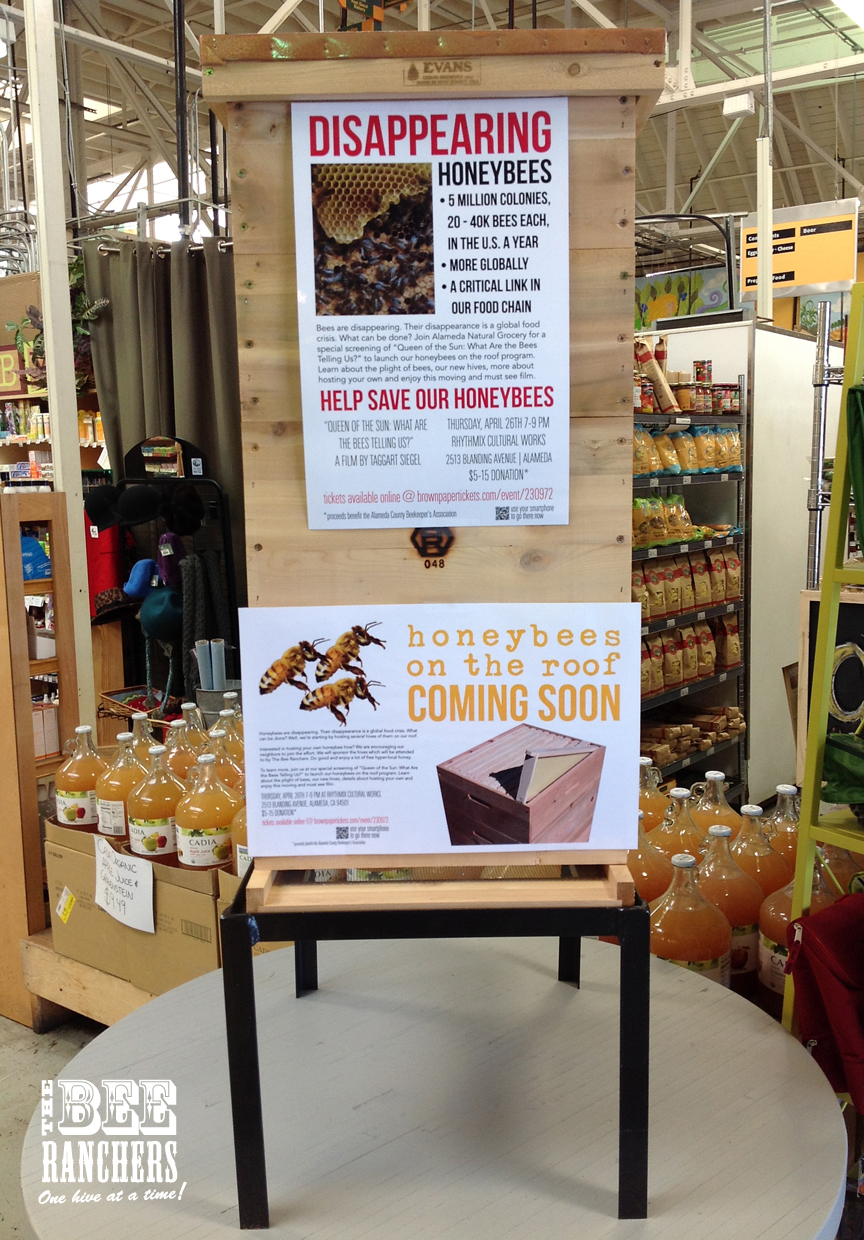
The pic above is one of several hives that Alameda Marketplace has purchased (and put on display) from The Bee Ranchers and that will be maintained by our Ranch Foreman, Mike Vigo. The hives have been installed on Alameda Marketplace’s rooftop. More about the collaboration between Alameda Marketplace and The Bee Ranchers in a future post.

Will you be making the event? Let us know if you plan attending. We’d love to see you there!

Beetography

What the heck is beetography you ask?

Technically it is a made up word but an oh-so perfect new word to describe our love of bee photographs. And what not a better way to celebrate this new classification of photography than to focus on one of our favorite beetographers, JP Lowery.

JP is an old friend of ours who hails from northern climes and has a knack for shooting very small critters in and around his garden. Fortunately for all of us some of those small critters are honeybees. The following photos are just a few of JP’s great shots. Can’t unleash the whole folio of images he has given us, we’ll post them from time to time for some great eye candy. Thanks again JP!

Would you consider yourself a beetographer? Are you interested in showcasing some of your shots on our site? Just ping me and I’m sure we can arrange to make you famous! We’d enjoy seeing the images people are capturing out there.

The Hive Diary / PART 1

Brand Foreman gets a hive!

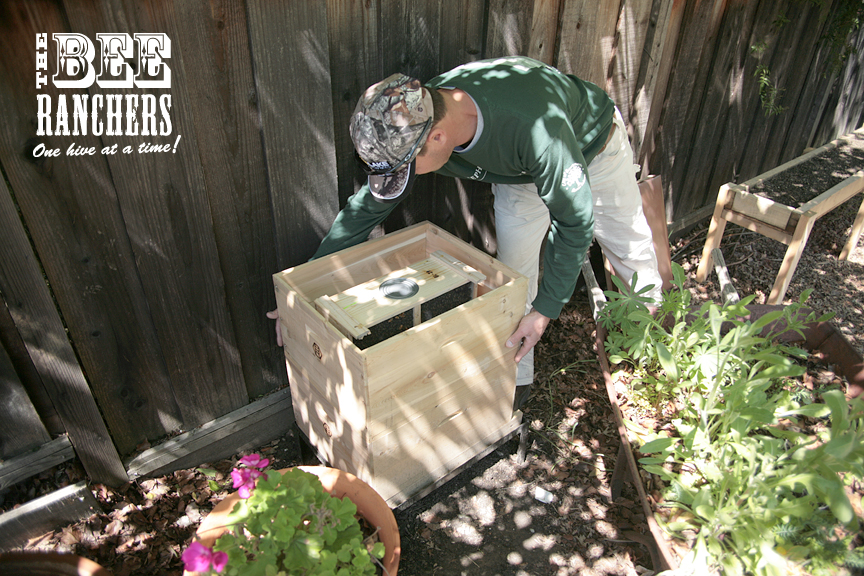
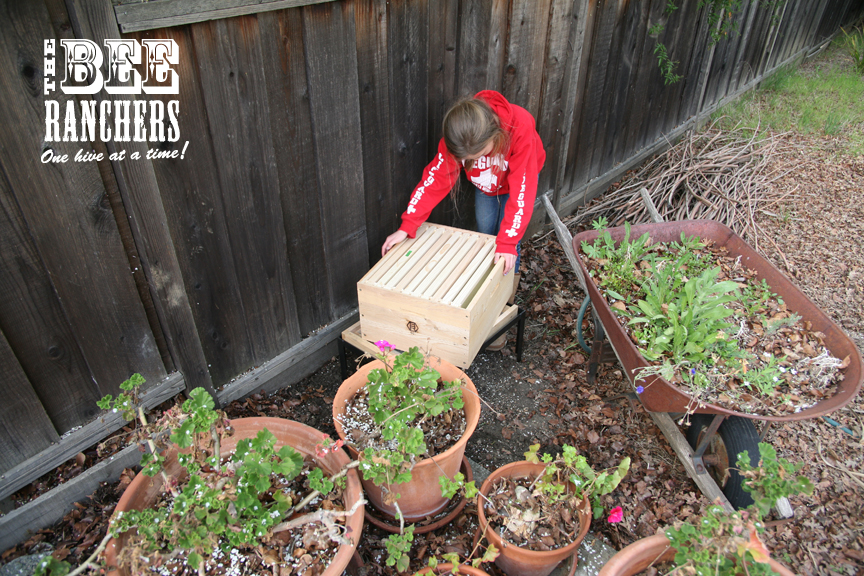
I’m excited to announce that I officially have a hive in my backyard. Hive #001 to be exact (by request). Mike (The Bee Rancher) and Ranch Hand Morgan came by last weekend to set it up. A true family affair.

Full disclosure. I’ve never owned a beehive before but have been around them from time to time at Mike’s house. It was great watching and documenting the whole affair. I’m excited to add this new facet to my backyard ecosystem/landscape. Now I should also mention that what I actually have is an empty beehive. The bees do not arrive until mid-April. Yeah, a little anti-climatic but in reality it is actually a good thing as it gives me time to acclimate to the location I have chosen for the hive.

The location of the hive (X marks the spot) is something Mike and I discussed in some detail. There are some key factors in choosing the right location. Ideally an area that gets a good amount of morning light. Certainly a location that is a fair distance from high traffic areas. And a location that is reasonably accessible as the hive will need to be tended to as Mike performs his care and maintenance.

I think we found a great location that fits all those parameters perfectly. My location highlights the hive in my backyard and may very well serve as a focal point. There certainly are other areas that would be suitable but less visible. As you’ve probably seen, these hives are beautiful, so I want to be looking at mine on a daily basis.

Plus Mike tells me there is nothing better than kicking back near the hive after work, cracking a beer and watching the honeybees wind down their day as well. Can’t wait. The beer is chilling in the fridge, now all I need are the Honeybees!

Some additional pictures of the hive installation below.

Stand Corrected

Or what we should call Honeybees VS Yellowjackets part deux!

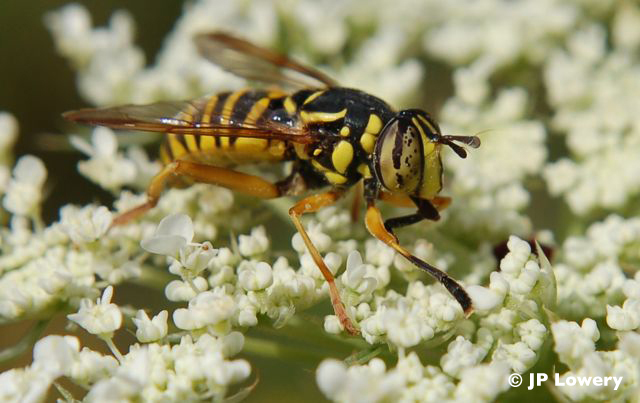
Perhaps some of you might remember our first post on this important subject, making sure people do not confuse the two – which happens a lot! We asked our good friend JP (an excellent photographer and a subject for a future post) to send us some shots of Honeybees and Yellowjackets. We were appreciative and posted. Below is an e-mail we received back from him not too long ago. Click to enlarge.

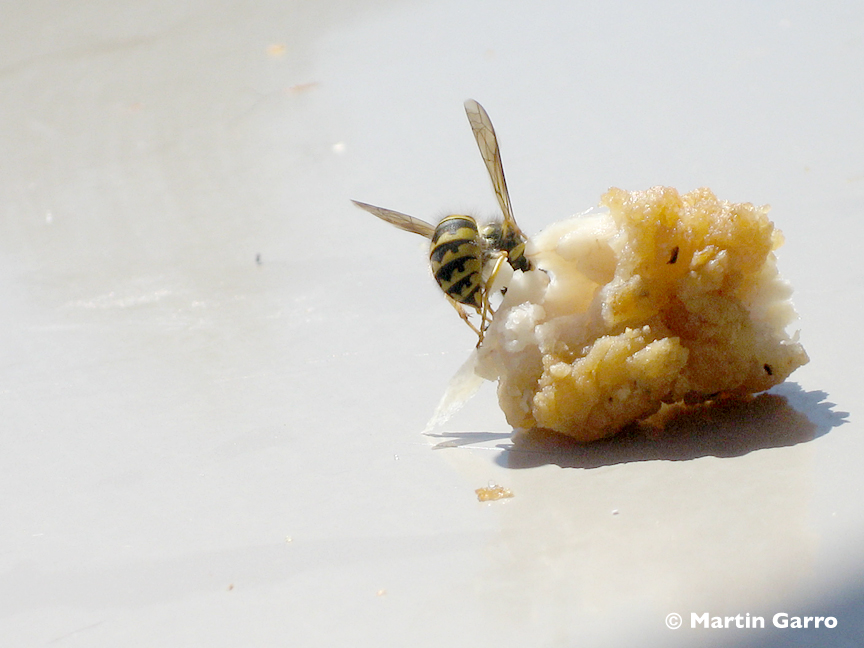
Entomologists we are not. It just so happens the Brand Foreman’s neighbor sends, via e-mail, some shots he has taken recently and BAM! Our culprit the Yellowjacket caught right in the act of eating what I can only assume is a chicken nugget, all seven herbs and spices too!

I don’t ever recall a Honeybee dining on a chicken nugget. Case hopefully closed. And for those who might be wondering about the misidentified “pollinating wasp”, here is the link to learn more about them.

Wasp-like Hoverflies

If I’m a betting man, this might not be the last we hear on this post.

Huge thanks to JP and Martin!

Spring swarms & Spring training!

We wanted to let all of our clients/followers know that we are just beginning to hit the swarming season for bees. This typically starts in the Spring time, right around the start of baseball season as you’ll see through the following video. GO GIANTS!

Swarm of bees delays Giants-Diamondbacks game

Honeybees will at times decide to leave a hive and start a new colony. They often will gorge themselves with honey and leave the hive on search for a new home. Typically what we see is a mass of honeybees clinging to random objects, trees, decks, automobiles, traffic lights, dug-outs, you name it and they might swarm it. Fortunately they do not swarm humans. In fact when honeybees display this behavior it is good to know they are at their most docile – due to being gorged with honey.

If you see a swarm, don’t panic! It is actually quite an interesting sight from a safe distance. Obviously if reachable, don’t let kids or animals mess with them. If you have time and are not alarmed, just let them be and they will most likely move on to their next location within 48 hours. If you do want them removed, give us a call and we’ll hive them and provide a new and safe home for the colony free of charge. And under no circumstances let anyone tell you to eradicated / kill them, which in our minds would be a tragedy.

“Leading the bees away with cotton candy and lemonade” sounds a bit suspicious to us!?

Mike Vigo / 925-519-0560

The picture below is one of my “Ranch hands” taking care of and collecting a swarm off of a parked vehicle.

Have you ever witnessed a swarm before? Where is the weirdest place you’ve ever witnessed a swarm? We’d like to hear your stories, drop us a line.

Has Spring sprung?

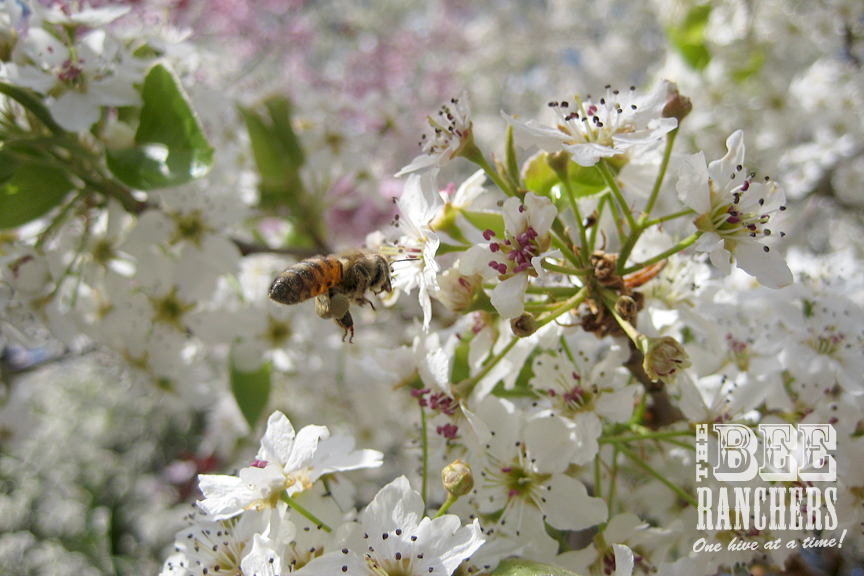
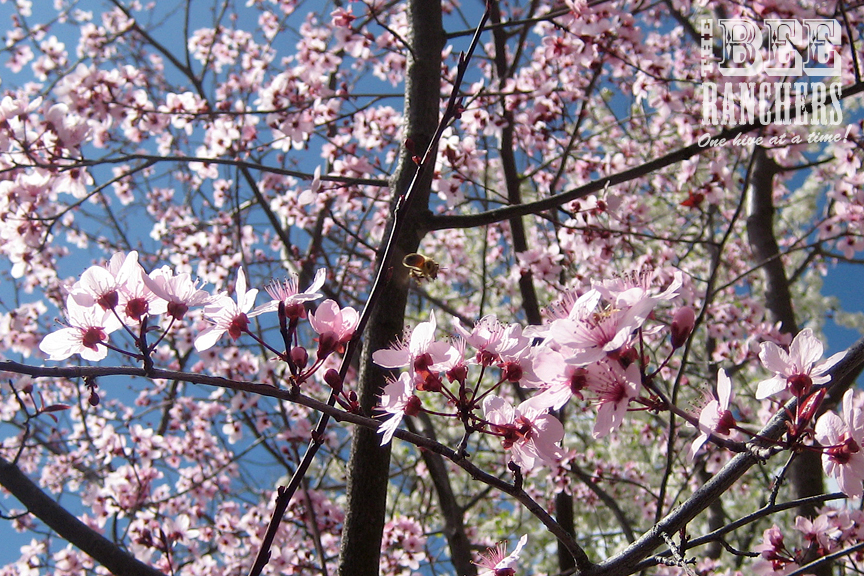
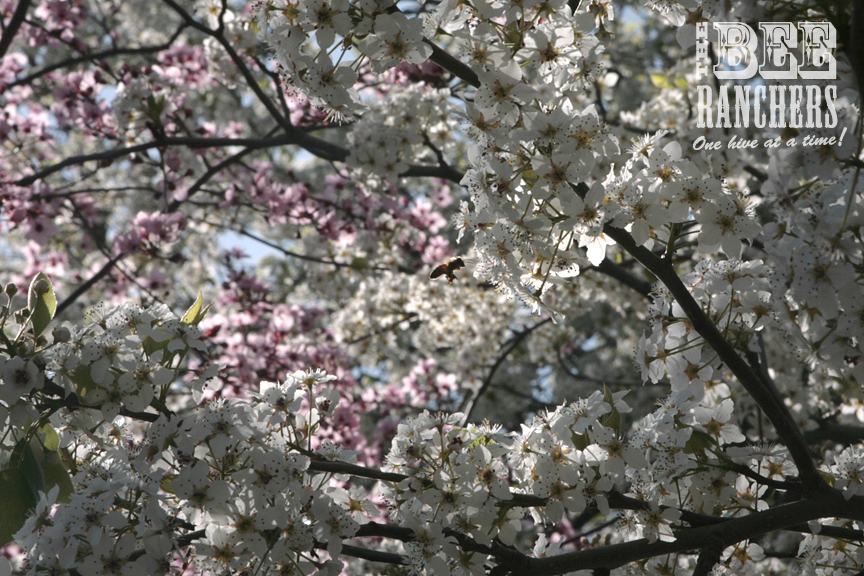
If the blossoming and buzzing fruit trees are any indication, the answer might be yes! The image below (Brand Foreman’s backyard) is probably a common sight throughout the Bay area lately. Hard to walk outside or drive around without seeing many fruiting trees with their blossoms on full display.

Just standing near one of these trees and it sounds like Spring is humming along! The trees in my backyard are literally humming / buzzing with activity. The honeybees are going nuts! An awesome site to see and cool thing to hear this early in the year. We can’t help but wonder what this portends for the honey harvest this year – an early bounty perhaps? Only time and eventually the bees will tell.

Below are some additional shots I took on a lunch break in the backyard on 02/27.

Honeybees VS Yellowjackets

One of the first questions we are typically asked by our prospective clients when discussing setting up a hive on their property is, “will the the Bees bother me?”. The simple answer is an emphatic “No”. Now certainly the location of a hive is carefully taken into consideration and typically positioned in an area that is not adjacent to high traffic or high use or play areas.

While the Bay Area serves as prime habitat for honeybees (pictured above), it unfortunately also serves as prime habitat for yellowjackets (pictured below). No regions are immune to this aggressive backyard pest and unfortunately they are often mis-identified as “bees”.

We are here to set the record straight, honeybees and yellowjackets are very different from one another and given the right information to look for, are actually quite easy to differentiate from one another.

Take a close look at the picture below and then read a few facts about how they differ from one another:


Honeybees and yellowjackets are distinctly different in color with yellowjackets having a more primary yellow coloration to the honeybee’s orangish/amber/brown.

Honeybees have a lightly fuzzy / hairy look to their bodies while yellowjackets have an almost glossy / waxy hairless look to their bodies.

Honeybees are pollinators and collect pollen within the hairs on their legs, yellowjackets do not have these hairs and are rarely seen with collections of pollen on their legs.

Honeybees eat nectar and are often found hovering around and pollinating flowers, yellowjackets are predatory (meat eaters), and while not attacking normal prey, can be distinctly found hovering around picnic tables and BBQs.

A honeybee’s flight pattern can be characterized as almost smooth in appearance, while a yellowjacket can be very fast with a rapid side to side movement prior to landing.

Honeybees have glands that can produce wax for construction of their honeycomb, yellowjackets do not have these wax producing glands.

Now that you are in the know, we’re sure you won’t mistake Yellowjackets for Honeybees. Should you have a stubborn persistent problem with yellowjackets in and around your yard there are several helpful resources that can inform you on how to eliminate and or mange these pests. Start with your local County Vector Control:

http://www.contracostamosquito.com/yellowjackets.htm